
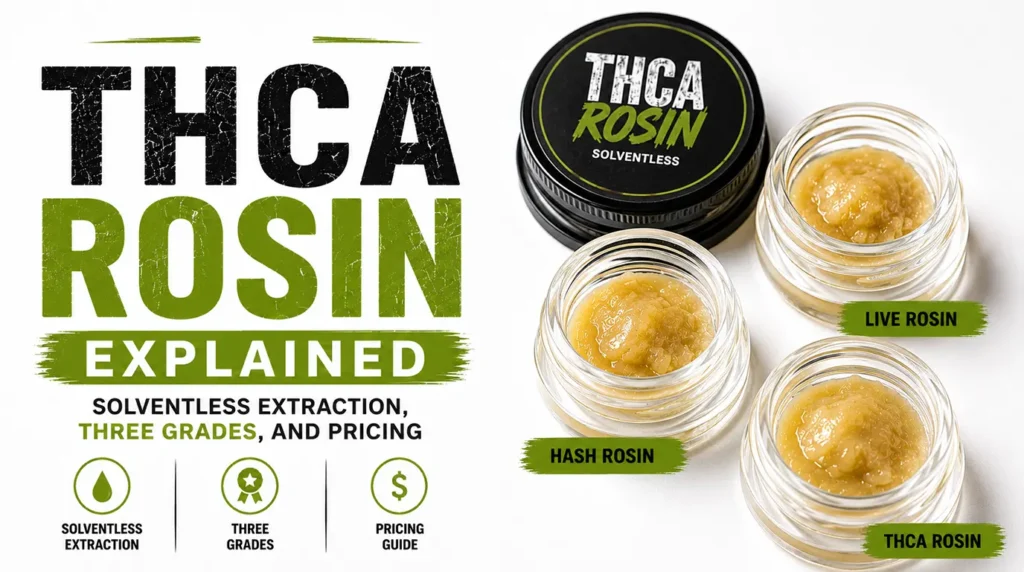
Rosin is cannabis concentrate produced by applying heat and pressure to cannabis flower or hash. No chemical solvents involved. Mechanical separation only. Heat liquefies the cannabinoid-and-terpene-rich oil. Pressure forces it out of the plant material. What drips onto the parchment paper is the rosin.
THCA rosin is rosin made from hemp-derived cannabis flower or hash, with the source material testing under 0.3% Delta-9 THC at harvest. Smoke or dab it, the THCA decarboxylates to Delta-9 THC and produces the standard cannabis high.
Solventless vs Solvent-Extracted (The Core Distinction)
Every other cannabis concentrate on the market uses chemical solvents at some stage. BHO (butane hash oil) and PHO (propane hash oil) wash flower with hydrocarbon gas, then purge the solvent off. Live resin uses the same hydrocarbon process on fresh-frozen flower. Distillate adds a distillation step on top of hydrocarbon extraction. CO2 oil uses supercritical carbon dioxide as the solvent.
Rosin uses heat and pressure. That’s it. A rosin press is a hydraulic machine with heated plates. Cannabis flower or hash goes between the plates. Heat (typically 150-220°F) and pressure (800-1500 PSI) liquefy the trichome contents and force them out as oil. The oil is rosin.
No residual solvent. No purge step. No chemical exposure. Only inputs are the plant material and energy.
Why “Solventless” Matters for Quality and Price
Three things change when you remove solvents from the equation:
- Terpene preservation. Solvent extractions use heat at the purge stage that destroys some terpenes. Solventless retains the full terpene profile because the only heat applied is the brief pressing temperature.
- No residual solvent risk. BHO and PHO production carries residual solvent risk if the purge is rushed. Properly produced solvent concentrate is safe, but the risk exists. Rosin has zero residual solvent because no solvent was ever used.
- Lower yield, higher labor, higher price. Rosin produces less concentrate per unit of starting material than solvent extraction. Solvent processes pull 10-20% by weight from flower. Rosin pulls 2-15% depending on grade. Lower yield plus the labor-intensive pressing process drives rosin pricing to the premium tier.
How Rosin Is Made (The Three Grades)
Three grades of rosin exist in the commercial market. Each starts with a different source material and produces a different product profile.
Flower Rosin (The Baseline)
Cured, dried cannabis flower goes between rosin press plates. Heat: 180-220°F typically. Pressure: 1000-1500 PSI. Press time: 30-90 seconds depending on the operator and the flower characteristics.
What comes out: 8-15% of the flower weight in rosin. So 10 grams of flower yields about 1-1.5 grams of rosin. Rosin is golden to amber. Terpene profile matches the source strain.
Flower rosin is the entry-level grade. Cheaper than live or hash rosin, still solventless, still preserves terpenes better than solvent concentrates.
Live Rosin (Fresh-Frozen Source)
The premium grade. Production has an extra step.
Fresh cannabis flower (frozen immediately after harvest before drying) goes through ice-water bubble hash extraction first. Fresh-frozen material gets agitated in ice water. Trichome heads detach. Trichomes are filtered through progressively finer mesh bags to separate by size. Result is bubble hash, which gets dried.
The bubble hash THEN goes into the rosin press. Heat: 150-180°F (lower than flower rosin). Pressure: 800-1200 PSI. Hash presses cleaner and faster than flower because plant material is already separated out.
Output: 4-8% yield based on starting flower weight, but the rosin is highest-purity and highest-terpene because the fresh-frozen processing locked in volatile terpenes before drying could degrade them.
Live rosin is the premium concentrate category. The “live” refers to the fresh-frozen source material, not the rosin itself. Critical disambiguation: live rosin is NOT live resin. Live resin is hydrocarbon-extracted from fresh-frozen flower; live rosin is solventless from fresh-frozen flower. Different process. Different product.
Hash Rosin (Bubble Hash Source)
Bubble hash or dry-sift hash gets pressed into rosin. The hash itself was produced from cured flower (not necessarily fresh-frozen). Press conditions are similar to live rosin: 150-180°F, 800-1200 PSI.
Hash rosin yield from the hash input is 60-75% (much higher than yields calculated from raw flower because the hash is already concentrated). Quality depends on the grade of the starting hash. Six-star bubble hash makes premium hash rosin. Lower-grade dry-sift makes mid-tier hash rosin.
Cold-Cure vs Hot-Pressed Finish
After pressing, rosin can be finished two ways.
Hot-pressed (traditional). Rosin is collected from the press and stored at room temperature. Texture varies: sappy, glassy, or oily depending on the source material.
Cold-cure. Rosin is collected and stored at refrigerator temperature for 48-72 hours. The cold cure causes the rosin to crystallize partially and form a buttery, badder-like texture. Cold-cure rosin is often easier to dab and many users prefer the texture.
Both finishes contain the same compounds. Texture differs. Pricing on cold-cure is usually $5-15/g higher because of the additional processing step.
Rosin Grades Comparison Table
| Grade | Source Material | Yield | Terpene Retention | Typical Retail Price |
| Flower Rosin | Cured cannabis flower | 8-15% | Moderate | $40-80/g |
| Live Rosin | Fresh-frozen flower → bubble hash → press | 4-8% | Highest | $60-120/g |
| Hash Rosin | Dry-sift or bubble hash → press | 60-75% from hash | Very high | $80-180/g |
Rosin vs Live Resin vs Distillate (Disambiguation)
The disambiguation that matters most.
Live resin is solvent-extracted (typically butane or propane) from fresh-frozen flower. Fresh-frozen source preserves terpenes. Hydrocarbon solvent is used for extraction and then purged. Live resin is premium solvent concentrate. Typically 65-85% cannabinoid. Retail $30-80/g.
Live rosin is solventless. Same fresh-frozen source material, but processed through bubble hash and then heat-pressed rather than washed with solvent. Live rosin is the most expensive concentrate category. Typically 65-85% cannabinoid. Retail $60-120/g.
People confuse these constantly. The single-letter difference (resin vs rosin) hides a fundamental production difference. Brand sells “live rosin” at hydrocarbon-extracted prices ($30-50/g)? Suspect it’s actually live resin mislabeled, or suspect the rosin claim entirely.
Distillate is the cheapest concentrate category. Hydrocarbon-extracted, then distilled to strip everything except the cannabinoid molecules. Terpene-stripped (often re-added artificially from non-cannabis sources). Highest cannabinoid percentage (85-95%) but lowest flavor complexity. Retail $20-50/g.
Rosin vs Other Concentrates Comparison
| Property | Rosin | Live Resin | Distillate | Drip Diamonds |
| Solvent used | None (heat + pressure) | Hydrocarbon (butane/propane) | Hydrocarbon + distillation | Various extraction paths |
| Terpene retention | High to highest | High | Stripped (added back) | Strain-true crystalline + terps |
| Cannabinoid % | 65-85% | 65-85% | 85-95% | 90%+ |
| Typical price | $40-180/g | $30-80/g | $20-50/g | Mid-premium |
| Best for | Flavor + experience | Flavor + value | Potency + price | High-purity dabbing |
Decision frame: solventless preference + flavor priority points to rosin. Solvent OK + flavor priority points to live resin. Maximum potency + price sensitivity points to distillate.
How to Dab THCA Rosin
Rosin dabs differently than other concentrates. The terpene-rich, lower-cannabinoid-percentage profile rewards lower-temperature dabbing.
The Right Nail Temperature
Optimal: 450-500°F.
For comparison:
- Distillate dabs well at 550-650°F (less terpene loss because terpenes are mostly absent already)
- Live resin dabs at 500-550°F
- Rosin dabs at 450-500°F (lower because terpenes are intact and we want to preserve them)
Higher temperatures destroy the terpenes that make rosin worth the price premium. Torch your nail until it glows and then drop rosin on it? You getting hash-oil-quality flavor from a $90/g product. Don’t do that.
Use a temperature-controlled dab rig (e-rig) for consistent temperature. Or torch a quartz banger and wait 35-45 seconds after the glow before dropping the rosin.
Dab Size for First-Timers
A pea-sized piece is too much. A grain-of-rice piece is right.
Start with 0.05 grams (50mg) for a first dab of rosin. At 70-80% cannabinoid, that’s 35-40mg of active compound hitting your lungs in one pull. Comparable to four edibles worth.
Wait 10 minutes. Reassess. Take another small dab if needed.
Why Carb Cap Matters for Rosin
A carb cap (a small dome that sits over the nail after the rosin is loaded) captures the vapor and lets it pool inside the nail before you inhale. This matters more for rosin than for distillate because the terpene-laden vapor benefits from the slow pooled inhale.
Bare-nail dabs without a carb cap waste 30-40% of the terpene profile to off-gassing. Carb-capped dabs trap the vapor. Worth the small extra step.
For deeper consumption technique on diamond-style concentrates (related category), see our Drip Diamonds smoking guide.
How to Spot Quality THCA Rosin (Buyer’s Frame)
Five quality checks before paying for any rosin.
The Five-Check Quality Frame
Check 1: Color. Quality rosin is light gold to amber. Dark brown indicates over-pressed (too much heat or pressure damaged the cannabinoids) or aged (oxidation darkened the product). Pale, almost-clear rosin can be over-purified and stripped of terpenes. Middle range (light gold to medium amber) is the sweet spot.
Check 2: Texture. Buttery, sappy, glassy, or budder-like textures are all valid for rosin. Inconsistent texture within one container (sappy in the middle, glassy at the edge) suggests improper cure or contamination. Consistent texture across the batch is the quality signal.
Check 3: Terpene smell. Quality rosin smells like the strain it came from. Diesel, citrus, pine, gas, earthy notes should be complex and recognizable. Flat or chemical smell suggests heat damage or contamination. Synthetic-sweet smell suggests added botanical terpenes (which would mean the product isn’t really rosin or has been adulterated).
Check 4: COA cannabinoid + production details. Real rosin COAs show the cannabinoid panel AND the source material (flower, bubble hash, dry-sift). Quality brands also disclose press conditions (temperature, pressure, press time) for transparency.
Check 5: Batch date. Rosin’s terpenes are volatile. Rosin pressed within the last 90 days is in peak flavor window. Older than 6 months loses noticeable punch. Older than 12 months should be discounted.
Red Flags in the Rosin Market
- Rosin priced like distillate ($20-30/g): probably not real rosin
- No COA: do not buy
- “Solventless” claim without third-party lab verification: suspicious
- Dark brown coloring with weak smell: aged, over-pressed, or low-quality starting material
- Hash texture (gritty plant matter visible): improperly filtered, low-grade
THCA Rosin Price (Why It Costs What It Costs)
Rosin is the most expensive cannabis concentrate category. Four reasons:
1. Premium starting material. Quality rosin requires premium fresh flower (for flower rosin), premium bubble hash (for hash rosin), or premium fresh-frozen flower processed through bubble hash (for live rosin). Mid-shelf or shake starting material produces mid-shelf rosin. The price reflects the input.
2. Lower yield than solvent extraction. A solvent extractor pulls 10-20% of the starting flower weight as concentrate. Rosin pulls 4-15% depending on grade. Lower yield means higher per-gram cost on the cultivator side.
3. Equipment investment. Industrial rosin presses cost $5,000-30,000. Hydraulic presses, heated plates, temperature controllers, pre-press molds. Operating costs include electricity for heating and maintenance for the pressing equipment.
4. Labor intensity. Each press cycle requires manual loading, monitoring, collection, packaging. Solvent extraction can run automated continuous-flow systems. Rosin is fundamentally batch production.
Price Landscape
| Product | Typical % Cannabinoid | Retail Price | Cost per mg |
| Flower Rosin | 70% | $60/g | $0.086/mg |
| Live Rosin | 75% | $90/g | $0.120/mg |
| Hash Rosin | 80% | $130/g | $0.163/mg |
| Live Resin | 75% | $50/g | $0.067/mg |
| Distillate | 90% | $30/g | $0.033/mg |
| Top-Shelf Flower | 25% | $15/g | $0.060/mg |
Rosin’s premium pricing is structural, not optional. The production process supports the pricing. See “discount rosin” at distillate prices? The discount is coming from somewhere (lower-grade starting material, mislabeled live resin, or counterfeit product).
For deeper math on cannabinoid pricing across formats, see our Total THC Formula piece.
How to Store THCA Rosin
Storage matters more for rosin than for distillate or hash oil because the terpenes are intact and volatile. Bad storage degrades rosin faster than any other concentrate.
Container. Airtight glass containers only. Avoid plastic (plastic absorbs terpenes over time, especially with rosin). Small Mason jars, dab containers with silicone gaskets, or food-grade glass vials all work. Container should be sized to the amount of rosin (large air gap accelerates oxidation).
Temperature. Cold storage is best. Refrigerator (38-42°F) for up to 6 months. Freezer (-10 to 0°F) for longer-term storage up to 12 months. Room temperature accelerates terpene loss and texture changes.
Light. UV light degrades both cannabinoids and terpenes. Store rosin in a dark place, dark-glass container, or wrapped in opaque material.
Handling. Use silicone or parchment-paper interfaces when handling. Direct skin contact transfers oils and warmth that degrade rosin. Cold dab tool helps maintain texture during portioning.
Shelf life signals. Quality rosin properly stored holds peak flavor and potency for 6-12 months. Room-temperature stored rosin loses noticeable terpene punch within 2-3 months. Oxidized rosin (dark brown, syrupy, flat smell) past prime; still smokes but tastes diminished.
Where Rosin Fits at Passion Farms (Catalog Honesty)
Honest disclosure: Passion Farms does not currently produce or sell rosin.
Our concentrate offering is Drip Diamonds. Drip Diamonds is a different concentrate category. High-purity crystalline THCA at 90%+ cannabinoid by weight, with strain-true terpenes layered into the product. The production path is different from rosin (we use a different extraction approach, not solventless pressing).
Solventless rosin specifically what you want? We don’t have it. We can point you to our concentrates types piece for the broader landscape, and to the buyer’s quality frame above for vetting any rosin brand you consider.
When we eventually press rosin (if we do), we’ll tell you on the product page. No celebrity endorsements faked. No cultural cosplay. No fake product claims.
For our flower line, the catalog is here. For Drip Diamonds as the closest concentrate alternative in our catalog, the product page is here.
FAQ
What is THCA rosin?
THCA rosin is a cannabis concentrate produced by applying heat and pressure to hemp-derived cannabis flower or hash, with no chemical solvents. The output is a golden-amber oil rich in cannabinoids and terpenes. THCA decarboxylates to Delta-9 THC when heated, producing the standard cannabis high.
What’s the difference between rosin and live resin?
Rosin is solventless (heat + pressure only). Live resin is solvent-extracted (typically butane or propane) from fresh-frozen flower. Both can be premium concentrates, but they use fundamentally different production processes. Live rosin (note: rosin, not resin) is the solventless equivalent of live resin’s fresh-frozen approach.
How is rosin made?
Cannabis flower or hash goes between heated plates of a rosin press. Heat (150-220°F) and pressure (800-1500 PSI) liquefy the cannabinoid-and-terpene oil. The oil drips onto parchment paper or a collection surface. No chemical solvents at any stage.
What is live rosin?
Live rosin is rosin made from fresh-frozen cannabis flower. The fresh-frozen flower is first processed through ice-water bubble hash extraction. The resulting bubble hash is then pressed into rosin. Live rosin has the highest terpene preservation of any rosin grade because the source material was frozen before terpene degradation could occur.
What’s the best dab temperature for rosin?
450-500°F. Lower than distillate (550-650°F) because rosin’s terpenes are intact and high heat destroys them. Use a temperature-controlled e-rig or torch your quartz banger and wait 35-45 seconds after the red-orange glow fades before dropping the rosin.
Why is rosin so expensive?
Four reasons: premium starting material required, lower yield than solvent extraction (4-15% vs 10-20%), significant equipment investment for proper pressing, and labor-intensive batch production. Rosin pricing typically runs 2-4x distillate pricing at comparable cannabinoid percentages.
How long does rosin last in storage?
Refrigerated and airtight: 6-12 months at peak quality. Freezer: up to 12 months for longer-term storage. Room temperature: 2-3 months before noticeable terpene loss. UV light and air exposure accelerate degradation.
Is rosin stronger than other concentrates?
Cannabinoid percentage (65-85%) is comparable to live resin and lower than distillate (85-95%). What rosin offers above other concentrates is terpene preservation, not raw potency. A 75% rosin and a 75% live resin will have comparable cannabinoid load; the rosin will have richer flavor.
What’s cold-cure rosin?
Rosin that has been stored at refrigerator temperature for 48-72 hours after pressing. The cold-cure process produces a buttery, badder-like texture that many users prefer. Cold-cure rosin typically retails $5-15/g higher than hot-pressed rosin due to the additional processing.
Does Passion Farms sell THCA rosin?
No. We don’t currently produce or sell rosin. Our concentrate offering is Drip Diamonds, which is a different concentrate category (high-purity crystalline THCA). For solventless rosin, you’d need to buy from another brand. We can point you to evaluation criteria.
Is rosin safer than BHO?
Rosin has zero residual solvent risk because no solvents are used. Properly produced BHO is safe (the solvent is fully purged), but the production process carries risk if the purge is incomplete. Rosin’s solventless production eliminates the residual-solvent variable entirely.
Can I make rosin at home?
Yes, with a rosin press. Home presses run $200-2,000. Quality and yield depend on operator experience. Home-produced rosin can match commercial quality with proper technique, the right starting material, and careful temperature/pressure tuning. Most beginners produce inconsistent results in the first 10-20 presses.

