Without a shadow of a doubt, it is a fact that the current U.S. cannabis market has easily crossed major revenue milestones, but it is the other side of the coin that their dispensary menus, even today, rely on classic strain categories to guide the operators’ purchasing decisions. Despite this rapidly evolving digital age, retailers and buyers are still using sativa vs indica effects as a shorthand for educating their customers and organizing any product assortments.
This traditional distinction has shaped merchandising strategies and wholesale sourcing decisions across regulated markets nationwide. This blog is all about clarifying traditional classifications with modern, compliance-safe insight for today’s cannabis operators.
What are the Origins of Cannabis Classification?
Cannabis classification began as a botanical system based on its observable plant traits. Early researchers used to categorize these plants based on their geographic origin, in which they studied their growth patterns and physical structure, rather than analyzing chemical compositions.
These categories were then later migrated into layman’s retail language as a simple educational tool for daily dispensary interactions. Today, understanding this historical context helps retailers to easily educate their consumers without oversimplifying complex plant chemistry.
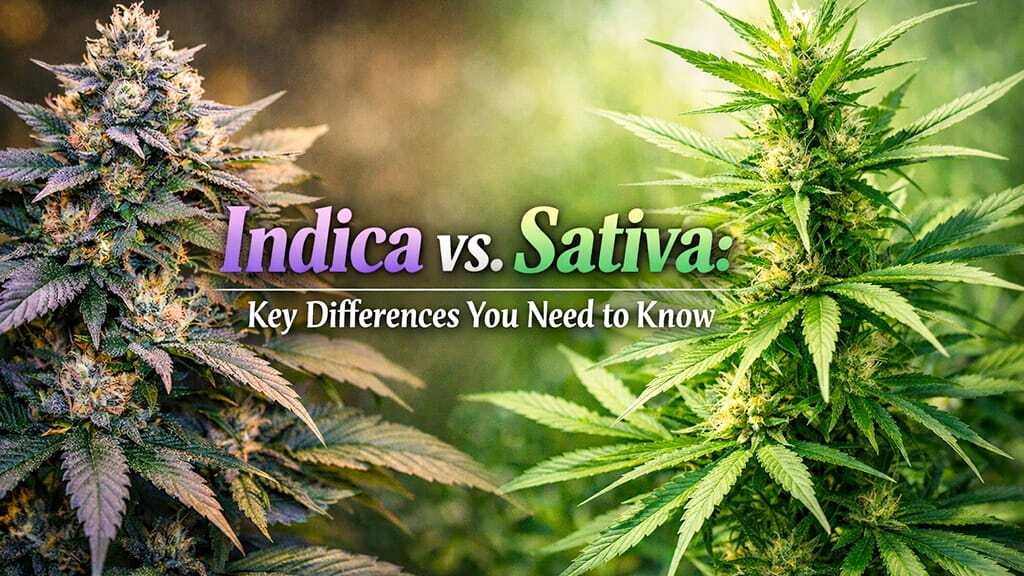
How do Indica And Sativa Differ as Plants?
These cannabis varieties showcase noticeable physical and structural distinctions from their early growth stages. The real difference between indica and sativa hugely depends on plant height and their leaf shape, which follows flowering patterns. They can be distinguished by
- Indica plants typically grow shorter with broader leaves and denser floral structures
- Indica plants usually take 45-90 days to grow and are found in Asian and Indian subcontinents
- Sativa plants generally grow taller with narrower leaves and elongated flower formations
- Sativa plants usually take 60-90 days to grow and are found in Thailand and southern Africa.
- Cultivation environments often influence these traits alongside genetics
- Modern hybrids frequently blur traditional visual distinctions
Indica vs. Sativa: Key Differences Explained
| Aspect | Indica | Sativa |
| Botanical Origin | Traditionally associated with regions like Afghanistan, Pakistan, and India | Historically linked to equatorial regions such as Southeast Asia, Africa, and Central America |
| Plant Structure | Shorter, bushier plants with thick stems and broad leaves | Taller plants with thinner stems and narrow, elongated leaves |
| Growth Cycle | Faster flowering cycles are often preferred for indoor cultivation | Longer flowering cycles, commonly grown in outdoor or greenhouse environments |
| Bud Formation | Dense, compact flower structures with heavier visual weight | Looser, airier flower structures with elongated bud shapes |
| Terpene Profile Trends | Commonly associated with earthy, musky, or herbal aromas | Often linked with citrus, fruity, or sharp aromatic profiles |
| Retail Classification Use | Frequently categorized for evening or relaxed menu sections | Often grouped into daytime or activity-oriented menu sections |
| Menu Organization Purpose | Helps dispensaries guide customers seeking calming or low-activity options | Helps retailers organize products associated with alert or social positioning |
| Consumer Education Framing | Explained as traditionally body-focused without making effect claims | Explained as traditionally mind-focused, without guaranteeing outcomes |
| Hybrid Prevalence | Pure indica genetics are increasingly rare due to crossbreeding | Pure sativa genetics are also uncommon in modern retail markets |
| Modern Industry View | Seen as a legacy classification supported by terpene and COA data | Considered a historical reference point supplemented by lab results |
| Wholesale Inventory Role | Used for SKU categorization, merchandising, and strain grouping | Used for demand forecasting and balanced menu representation |
| Compliance-Safe Explanation | Described using plant structure, lineage, and aroma—not medical effects | Communicated using botanical traits and terpene presence only |
Chemical Profiles Matter More Than Labels
Modern cannabis science is more emphasized on cannabinoid and terpene composition over legacy strain names. However, two plants labeled as the same can produce very different chemical profiles depending on the plants’ genetics and cultivation methods. Retailers have to rely on lab data to back up their traditional strain education. This shift helps to reduce reliance on outdated assumptions while improving transparency.
How Indica and Sativa Differ In Retail Education?
Retailers often use classic categories as an entry point to begin customer conversations. Understanding how do indica and sativa differ allows operators to clearly discuss a topic without making any overstated prohibited claims. They showcase
- Structural plant differences explained visually
- Historical strain lineage used for context
- Terpene profiles introduced as decision factors
- Lab reports referenced for factual clarity
This blended approach balances tradition with modern compliance standards that support sales.
Market Demand and Category Organization
To ease their product navigation, dispensaries are now frequently organizing menus using indica and sativa categories. According to them, this strategy results in making faster purchasing decisions while reducing customer confusion. Wholesale buyers also align inventory planning with these groupings. A consistent categorization always improves the menu readability, resulting in higher retail efficiency.
Consumer Language Versus Scientific Accuracy
Retail cannabis language has now simplified numerous complex topics into layman’s terms. However, while being convenient, this simplification also requires careful framing to escape from indulging in any product misinformation. Operators benefit from training staff to explain these classifications as general descriptors rather than sounding like offering guarantees. Accuracy builds trust among retailers and customers, and it also protects compliance.
The Role of Energizing Sativa Strains in Menu Strategy
Certain dispensary menus highlight energizing sativa strains only to meet their productivity-oriented demand segments. These labels function more as marketing tools rather than concrete scientific promises. Retailers should tether these categories to terpene data and lab results for better customer clarity and boosted sales. A balanced education of both results in enhanced customer satisfaction.
Hybrids and the Evolution of Modern Cannabis
Most cannabis sold today results from extensive hybridization. Hybrids combine traits from multiple genetic lineages, making strict classification increasingly difficult. Retailers now emphasize dominant characteristics rather than pure strain types. This evolution reflects both consumer demand and cultivation innovation.
Wholesale Implications for Strain Categorization
Wholesale buyers rely on consistent classification for inventory planning and SKU management. Clear categorization helps streamline ordering, forecasting, and merchandising. Suppliers who provide transparent documentation support retail confidence. Alignment between wholesale and retail language reduces friction.
Compliance-Safe Communication Matters
Regulated markets require careful language when discussing cannabis categories. Retailers must avoid claims related to medical outcomes or guaranteed effects. Using descriptive, factual terminology supports compliance while educating customers. This discipline protects both dispensaries and wholesale partners.
Connecting Classification to Product Formats
Strain categories influence product development across flower, concentrates, and infused items. Retailers often extend indica or sativa labels across multiple formats for consistency. Wholesale suppliers must maintain accurate documentation across these extensions. Consistency supports brand integrity and customer understanding.
THCA and Emerging Product Categories
The rise of hemp-derived cannabinoids adds another layer to classification conversations.
Operators sourcing THCA wholesale Products must navigate both compliance and consumer education carefully. Clear differentiation between botanical categories and chemical composition becomes essential. Wholesale partners play a key role in documentation accuracy.
Training Staff for Smarter Conversations
Major dispensaries that are making money are using their money to train their staff. Effective dispensary education starts with well-trained staff. The dispensary guy should be able to communicate modern science and compliance boundaries to enhance their customer satisfaction. This knowledge exchange enables confident customer interactions to build better leads. It is witnessed that education-driven retail experiences build long-term loyalty.
Industry Perspective on Classification Trends
The cannabis industry is rapidly moving toward chemistry-based education models. However, classic categories are only valuable for matching a quick reference and menu organization.
Successful retailers are experts in blending tradition with science. This balance further reflects industry maturity.
Partnering With a Knowledge-Driven Wholesale Operator
Passion Farms operates with vertically integrated systems that are exclusively designed to support compliant wholesale distribution across regulated U.S. markets. Our infrastructure strictly emphasizes batch traceability with documentation accuracy and controlled handling across product formats. By aligning cultivation to processing, including distribution under one operational framework, we are simplifying multi-product sourcing to ease the business. Moreover, our operator-focused model supports retailers seeking consistent flowers.
Bottom Line: Moving Forward With Clarity and Confidence
Understanding sativa vs indica effects is essential for retail education for more sales and wholesale alignment for wider operations. Recognizing the difference between indica and sativa while explaining how do indica and sativa differ helps retailers to communicate with product accuracy. As menus have evolved, a clear classification supports customer trust, and it boosts operational efficiency as well.
Connect with the team to explore wholesale solutions that support education-driven, compliant cannabis retail strategies.
Legal Disclaimer: This article is for informational purposes only and does not provide medical, therapeutic, or legal advice. All cannabis references comply with applicable state and federal regulations. Businesses remain responsible for ensuring compliance with local laws and labeling requirements.