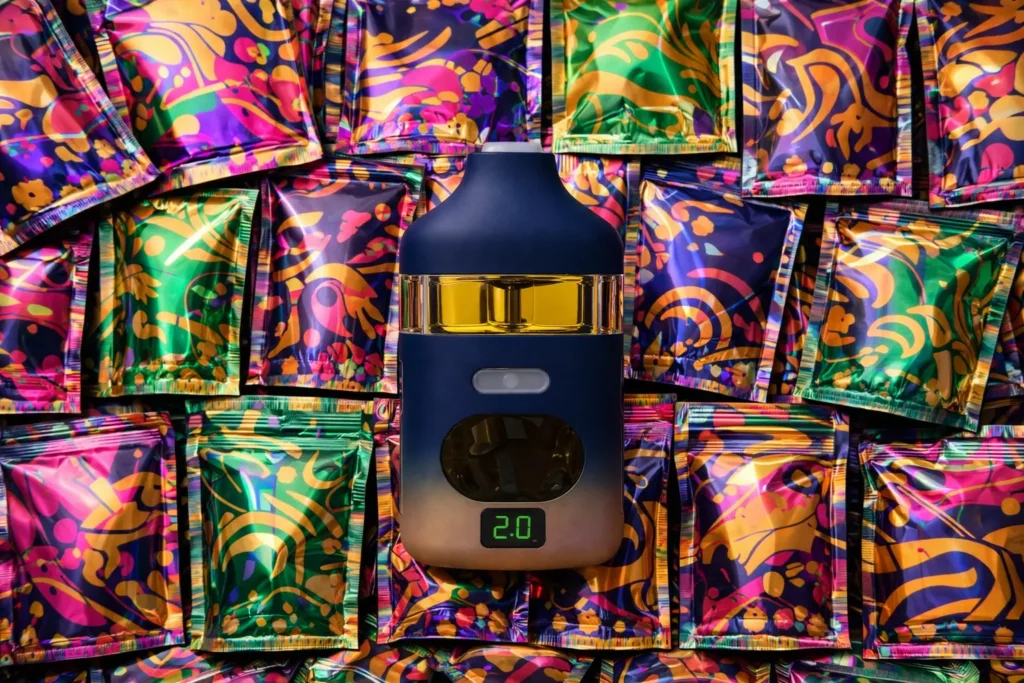
Wholesale 2g disposable carts run between $8 and $22 per unit. Where you land in that range depends on how many you’re grabbing, who you’re grabbing them from, and whether the product ships with real lab-tested COAs or just a label that looks official. At 100 units you’re paying closer to $18-$22 each. Hit 500 and the number drops to $12-$16. Push past 1,000 and the actual pricing opens up, typically $8-$12 per unit from a licensed supplier with verified third-party testing. The 2g format is outselling 1g disposables roughly 3-to-1 at retail right now, and if your shop is not stocking them, your customers are walking to one that does.
Not speculation. The 2g disposable is the fastest-moving SKU in cannabis vape, been trending that direction since mid-2024. Retail on a quality 2g disposable sits between $30 and $55 depending on the market and the brand behind it. Wholesale buyers working at volume are looking at 45-65% margins before overhead. Those numbers justify a phone call. But the brands worth stocking (and the ones that photograph well on Instagram but leak all over your display case) make or break whether those units fly off shelves or sit there collecting dust behind the counter like a bad decision you can’t return.
This guide is for the person placing the order. We are breaking down the brands that actually perform at wholesale, real pricing at every volume tier, MOQ requirements that will not lock you into product you cannot move, how to catch a supplier running fake COAs or recycled hardware, and the margin math so you know what you’re pocketing per unit. Everything a dispensary owner, smoke shop retailer, or distributor needs to pull the trigger without guessing.
Why 2G Disposables Are Taking Over Retail Shelves
The Consumer Shift: Why Buyers Want More Product, Less Hassle
The move to 2g disposables was not some marketing department’s bright idea. Consumers pushed it. A 1g disposable gets most regular users through maybe two days, three if they’re conservative. That means they should be back in your store twice a week buying the same thing. Except they are not coming back twice a week. They’re going wherever is closest or cheapest on that second trip. A 2g unit keeps them locked in for five to seven days. Fewer trips. More satisfaction per visit. Higher perceived value, and that last one matters more than people give it credit for.
From the consumer side the math writes itself. Two 1g disposables at $25 each is $50 for 2 grams. One 2g disposable at $40 is the same amount of product for less money with one less thing to carry around.
That is not a hard sell. That is common sense.
Shelf Velocity: How 2G Dispos Outsell 1G in Real Retail Data
Retailers who’ve stocked both formats side by side already know what happens. The 2g outsells the 1g in most markets by a wide margin, some shops on Westheimer and Richmond report the ratio climbing as high as 4-to-1 during peak months. The reasons are not complicated: customers want sessions, not samples. Something that lasts the weekend without a midweek re-up.
Nobody goes back to the small size once they’ve hit a 2g that actually performs. It’s the cannabis version of the upgrade. Once somebody experiences it, the 1g starts looking like a trial pack you’d hand out at a convention.
Every serious retailer is reallocating shelf space right now. The 2g format is not a trend. It is the new standard. And if you’re buying wholesale, this is the product your reorder rate gets built on.
2G Disposable Cart vs 1G: Which Should Retailers Stock?
Per-Unit Cost Comparison (Wholesale)
| Factor | 1G Disposable | 2G Disposable |
|---|---|---|
| Wholesale Cost per Unit | $5-$12 | $8-$22 |
| Typical Retail Price | $20-$30 | $30-$55 |
| Per-Unit Margin | $8-$18 | $12-$33 |
| Avg. Customer Reorder Frequency | Every 2-3 days | Every 5-7 days |
| Shelf Velocity (relative) | Baseline | 2-3x higher |
| Customer Perception | Standard / Budget | Premium / Value |
Yes, the 2g costs more per unit at wholesale. Obvious. But the margin per unit is fatter, the reorder cycle is smoother for inventory management, and the customer walks out feeling like they got their money’s worth instead of wondering if they should’ve grabbed two. You are not selling more product per gram. You are selling a better experience that happens to contain more product.
Customer Demand and Reorder Rates
A shop stocking only 1g disposables is going to see more frequent but smaller transactions. Sounds appealing until you realize those customers are also way more likely to comparison-shop on every single trip. The 2g buyer tends to stick with a brand because they made a slightly bigger commitment and the product lasted long enough to form a real opinion on. Loyalty is not built on convenience alone, but it sure does not hurt.
When 1G Still Makes Sense
Keep 1g disposables around for two scenarios and two scenarios only. New customers who want to try a strain without dropping $40-plus. And tourists or occasional buyers who are not looking to commit to anything. But the core of your disposable shelf? 2g. That is where the velocity lives.
Top 2G Disposable Cart Brands for Wholesale in 2026
The top 2g disposable cart brands for wholesale in 2026 include Passion Farms, Loaded, Cookies (Lemonnade), Jeeter, Stiiizy, and Happi. Each brings a different value proposition depending on what your customers gravitate toward and what your margins need to look like.
Brand Breakdown
Passion Farms runs 2g disposables out of their California cultivation with ceramic coils, rechargeable batteries, and full-panel COAs on every batch. Strains rotate based on what’s actually harvesting that month, not what was popular on a menu template eight months ago. Wholesale pricing is competitive at volume, and the 2g disposable collection covers both indica-dominant and sativa-dominant options that move consistently at retail. We had a retailer in Oklahoma reorder Jealousy three times in six weeks before he even tried anything else on the menu.
Loaded has name recognition in the 2g space and ranks well online, but their product line skews younger and more budget-conscious. Hardware quality is inconsistent. Some batches perform fine. Others have had draw issues and oil levels that do not match what the packaging promises.
Cookies / Lemonnade carries brand weight that everyone recognizes. The wholesale pricing reflects that brand premium though, and depending on your market, customers may or may not pay the extra $10 just for the logo when a comparable product sits right next to it on the shelf.
Jeeter is widely distributed with solid retail recognition, particularly in California. Their 2g infused pre-rolls crossover nicely with the disposable audience. But wholesale availability gets spotty outside of CA and a handful of licensed states, which makes consistent restocking a headache if you are not in their core distribution zone.
Stiiizy dominates shelf space wherever they’re available. The problem for most wholesale buyers is access. Stiiizy distribution is tightly controlled and their MOQs tend to run higher than what smaller operators can stomach upfront.
Happi positions as a hemp-derived option. Lower price point at wholesale and broader shipping availability, but the customer who wants a full-spectrum cannabis experience is going to notice the difference. They will notice.
What Separates a Shelf-Mover from Dead Inventory
Some of these brands look good on paper but fold when you actually test the oil. We have seen shops get burned stocking product because the packaging was attractive and the Instagram had followers. What a resume that is. Here is what actually matters: does the hardware work consistently, does the oil taste like the strain it claims to be, and does the brand pick up the phone when something goes wrong? If a supplier ghosts you after the invoice clears, the margins are irrelevant.
2G Disposable Cart Wholesale Pricing: What to Expect at Every Tier
Wholesale 2g disposable carts typically cost $18-$22 per unit at 100-unit orders, $12-$16 at 500 units, and $8-$12 at 1,000-plus units. Pricing varies by brand, hardware quality, and whether the product includes lab-tested COAs. Volume discounts of 15-30% are standard above 500 units.
100-Unit Pricing
Your testing tier. You are evaluating a new brand or a new strain before you commit heavier capital, and that is smart. Expect $18-$22 per unit from a reputable supplier. Some brands offer sample pricing slightly below this for first-time buyers, but be careful with anyone quoting sub-$15 at 100 units. That usually means the hardware is cheap, the oil is cut, or the COAs were generated for a different batch entirely. We have seen all three, sometimes on the same order.
500-Unit Pricing
The sweet spot for established retailers pulling steady foot traffic. At this volume you are looking at $12-$16 per unit with most licensed suppliers. This is where the margin math starts making actual sense, where the per-unit cost drops enough that your retail price feels generous to the customer and profitable to you at the same time. You are buying at scale but not overcommitting inventory you cannot move if a strain underperforms.
1,000+ Unit Pricing
Distributor territory. Multi-location operators and regional distributors can access $8-$12 per unit at this level. The per-unit savings are real, but so is the cash outlay. Most suppliers here expect wire transfers or net terms for accounts with history. If somebody offers you net-30 on your first 1,000-unit order without checking references, ask yourself why.
Hidden Costs: Shipping, Compliance, Packaging
The per-unit price is only part of the math. Factor in shipping (especially for hazmat-classified lithium battery products, which most disposables technically are), compliance packaging requirements that differ by state, and any custom branding or labeling you need. A $10 unit can become $12.50 landed cost when you stack all the extras together. Ask your supplier for the all-in number before committing. Not after.
| Volume Tier | Price per Unit | Typical MOQ | Best For |
|---|---|---|---|
| 100 units | $18-$22 | 100 | Small shops testing a new brand or format |
| 500 units | $12-$16 | 250-500 | Established retailers with consistent demand |
| 1,000+ units | $8-$12 | 500-1,000 | Distributors, multi-location operators |
MOQs, Lead Times & Shipping: How 2G Disposable Wholesale Actually Works
Typical MOQs by Supplier Type
Minimum order quantities come down to who you are buying from. Licensed brands running their own manufacturing usually set MOQs at 100-250 units for new accounts and 500-plus for reorders. White-label manufacturers and contract fillers sometimes drop that to 50-100 for initial runs, which can be useful for testing. Brokers and middlemen (the ones without a facility, without a grow, sometimes without even a warehouse) tend to be the most flexible on MOQs because they are aggregating demand across multiple buyers and marking up accordingly.
That flexibility sounds appealing. But flexible MOQs from a source that does not own their grow or their fill lab should make you ask harder questions about where the product actually originates. Who filled it? When? What lab tested it? If the answers come slow or vague, you already have your answer.
Lead Times: From Order to Doorstep
Standard lead times for wholesale 2g disposable carts run 5-14 business days depending on whether you are pulling from existing inventory or requesting a custom fill. Stock orders ship faster. Custom strain requests, private labels, or specific hardware configurations add a week or more. And during peak seasons (4/20, holiday weekends, summer) expect lead times to stretch considerably. Build that into your ordering cadence or you will run out at the worst possible time, which is exactly when your competitors down the street will not.
Shipping and Compliance Across State Lines
This is where a lot of wholesale buyers get tripped up badly. If you are purchasing THCA or hemp-derived products, shipping across state lines requires compliance with both federal hemp regulations and the receiving state’s rules. Some states have restricted or banned certain cannabinoids even when they’re technically hemp-derived under the Farm Bill. Your supplier should know the current THCA legality in Texas and California for wholesale buyers and walk you through the documentation your state requires. If they cannot answer that question clearly, or if they wave it off like it does not matter, that is a red flag the size of a billboard.
How to Vet a 2G Disposable Supplier (Red Flags & Must-Haves)
COAs and Lab Testing: Non-Negotiable
Every unit you put on your shelf needs a Certificate of Analysis from an accredited third-party lab. Not a template somebody made in Canva with a stock photo of a beaker. Not a screenshot from a batch that shipped four months ago. A real COA that matches the batch number printed on the product you are holding in your hand. It should show cannabinoid potency, residual solvents, pesticides, heavy metals, and microbial contamination results at minimum. If your supplier hesitates when you ask for batch-specific testing documentation, that tells you everything you need to know about what is inside that cartridge.
Hardware Quality: Ceramic vs Wick, Battery Life, Leak Risk
The oil can be perfect and the customer experience can still be awful if the hardware is garbage. Ceramic coil heating elements deliver cleaner flavor and more consistent vapor production than wick-based systems. Rechargeable batteries matter for a 2g unit because 2 grams of oil will outlast a non-rechargeable battery every single time. That is not a selling point. That is physics. Leak-proof design is not a premium feature to advertise. It is the bare minimum. If units are leaking in display cases or in customers’ pockets, you are eating those returns and losing the customer permanently.
Counterfeit and Gray-Market Red Flags
We have been in Houston long enough to know the difference between a real connect and a dude with a website and a dream. Counterfeit 2g disposables are everywhere in 2026, more than most people realize. The packaging looks identical to the real thing. The price is always suspiciously good.
And the oil inside is untested mystery distillate from who knows where.
Red flags: pricing that undercuts every other supplier by 30% or more, no verifiable business license, COAs that do not match the batch sitting in front of you, inconsistent branding across units in the same order, and a supplier who only communicates through Telegram or encrypted chat with no phone number and no facility address. We had a shop owner in Third Ward show us packaging from a “wholesale supplier” last year. Looked exactly like a licensed California brand. The oil tested at 40% below what the label claimed.
Margin Math: What Retailers Actually Make on 2G Disposable Carts
Per-Unit Margin Breakdown by Volume Tier
| Scenario | Wholesale Cost | Retail Price | Margin per Unit | Margin % |
|---|---|---|---|---|
| Low volume (100 units) | $20 | $45 | $25 | 56% |
| Mid volume (500 units) | $14 | $45 | $31 | 69% |
| High volume (1,000+) | $10 | $40 | $30 | 75% |
These numbers assume a mid-market retail price point and a customer base that is not entirely price-driven. Premium brands in premium markets can push retail to $50-$55 and widen that per-unit margin even further. Budget brands in competitive markets might sit closer to $35 retail, compressing the margin but theoretically increasing turnover. Your market determines which lane you are in. Trying to play both at once is how shops end up with confused customers, inconsistent inventory, and a display case that tells no coherent story about what kind of store you are.
Retail Price Optimization: Where to Set Your Price Point
Most retailers land between $35 and $50 for a quality 2g disposable. Under $35 and your customers start asking what is wrong with it, why is it so cheap, is this real. Over $50 and you need serious brand recognition to justify the tag. The sweet spot for most independent shops is $40-$45, which balances perceived value with a comfortable margin at the 500-unit wholesale tier. One shop owner we work with in Dallas tested three price points over two months and found that $42 moved 22% more units than $48 with only a $6 per-unit margin difference. The volume made up for it and then some.
Margin Comparison: 2G Dispo vs Other Vape SKUs
Compare that to 1g cartridges (510 thread) where wholesale runs $4-$8 and retail sits at $15-$25. Per-unit margin is lower and the perceived customer experience is less premium. Flower margins are thinner and the product degrades faster sitting on the shelf. Edibles carry strong margins but move slower in most shops. The 2g disposable occupies that rare intersection of good margin, high velocity, and low customer friction. That is why it is eating shelf space from everything else.
That is the kind of math that makes restocking feel like payday.
Best-Selling 2G Disposable Strains for Wholesale
Top Indica, Sativa, and Hybrid Strains Moving Right Now
Strain selection at wholesale is about stocking what people actually buy, not what sounds exotic printed on a menu board nobody reads past the first three items. Right now the strains moving fastest in 2g disposable format tend to follow whatever is trending in flower, with a few format-specific preferences that are worth paying attention to.
Indica-dominant strains like Jealousy, Purple Punch, and Gelato 41 perform consistently no matter what market you are in. Customers buying 2g disposables skew toward evening use and longer sessions. Heavy indicas are what they reach for. The Jealousy that Passion Farms runs out of their Cali grow has been one of the fastest reorders across their wholesale flower program. The disposable version follows the exact same pattern, which makes sense because the oil comes from the same plant.
Sativa-dominant options like Durban Poison and Jack Herer have a loyal following, particularly in daytime-use markets and among customers who work from home and treat a 2g sativa the way office workers treat a coffee subscription. They do not outsell indica 2g units overall but they fill a gap on the shelf that keeps variety buyers from going elsewhere.
Hybrids like Runtz, Wedding Cake, and Biscotti split the difference and tend to perform well across buyer types. If you are limited to 3-4 strains on your first wholesale order, a strong hybrid selection with one standout indica is the safest play. You can expand from there once you know what your specific customer base gravitates toward.
Strain Selection Strategy for Retail Buyers
Stock 60% indica-dominant, 25% hybrid, 15% sativa as your starting ratio. Adjust based on what your customers tell you at the counter and what the reorder data actually shows over 60-90 days. The worst move is stocking 8 strains at low quantities because it looks impressive on paper. Better to go deep on 4-5 proven performers than spread thin across options nobody asked for.
Wholesale 2G Disposable Carts from Passion Farms
What PF Offers: Strains, Hardware, Lab Testing
Passion Farms grows its own flower in California and Oklahoma. The 2g disposables are filled from that same cultivation pipeline, so the oil inside matches the flower you can hold in your hand. Ceramic coils. Rechargeable batteries. Full-panel COAs on every batch, available before you place the order so you know exactly what you are getting before any money moves.
The strain menu rotates with what is actually ready from the grow, not what looks good on a product page that has not been updated since last harvest.
We are not trying to be everybody’s supplier. We are trying to be the right one for people who are tired of dealing with the wrong ones. If you have been through the cycle of bad batches, ghost suppliers, and product that does not match the pictures they sent you, you already know what you are looking for. You do not need us to explain it.
How to Place a Wholesale Order
Straightforward. Check the current strain availability on the site. See what works for your menu and your market. Contact our wholesale team with what you need and we will send you current pricing, MOQ options, and COAs for the batches available right now. First-time accounts start at 100 units. Returning accounts get priority on new drops and volume pricing. You can also browse all Passion Farms products to see the full lineup before reaching out.
No hard sell. No pressure. The product and the pricing speak for themselves. They always have.
Frequently Asked Questions: 2G Disposable Cart Wholesale
How much do 2g disposable carts cost at wholesale?
Between $8 and $22 per unit depending on volume. At 100 units expect $18-$22. At 500 units the range is $12-$16. Past 1,000 units you are looking at $8-$12 with most licensed suppliers. Always ask for the all-in cost including shipping and compliance packaging because that number is the one that actually matters.
What is the minimum order quantity for wholesale 2g disposable carts?
Most licensed suppliers set MOQs between 100 and 250 units for new accounts. Some contract manufacturers go as low as 50. At Passion Farms, first-time wholesale orders start at 100 units with no contract attached.
Are 2g disposable carts better than 1g for retail?
Yes. For most retail environments the 2g outsells the 1g by a wide margin. Higher per-unit margin, better customer satisfaction, stronger reorder rates. Keep a small 1g selection for entry-level buyers and people testing new strains, but build your shelf around the 2g format.
What should I look for when buying 2g disposable carts in bulk?
Third-party COAs matching the specific batch you are receiving. Ceramic coil hardware. Rechargeable batteries. And a supplier who actually answers the phone when you call. If any of those are missing, keep looking.
How many puffs are in a 2g disposable cart?
Roughly 400-800 puffs depending on draw length and heating element efficiency. Most regular users get 5-7 days of use from a 2g unit. The range is wide because everybody hits differently and nobody is counting.
Are 2g disposable carts real or fake?
Real 2g disposables absolutely exist from licensed manufacturers. But counterfeits are everywhere and getting better at looking legitimate. Look for batch-specific COAs from accredited labs, consistent branding across every unit in your order, a verifiable business license from the supplier, and pricing that is not suspiciously below market. If the deal looks too good, the oil inside probably is not what the label says.
What’s the difference between a 2g disposable and a 2g cartridge?
A disposable is all-in-one. Battery and oil integrated, use it and recycle it. A cartridge requires a separate 510-thread battery. Disposables are more convenient for the end consumer and carry higher retail price points. Cartridges appeal to the cost-conscious buyer who already owns a battery and does not want to pay for another one.
Can I buy 2g disposable carts wholesale in Texas?
Yes, if the product is hemp-derived and compliant with federal and Texas state regulations. THCA products derived from hemp (under 0.3% delta-9 THC by dry weight) are currently legal in Texas, though the legal landscape is evolving and has been the subject of multiple legislative attempts to restrict it. Check current regulations and work with a supplier who understands THCA legality in Texas before placing an order.
How long does a 2g disposable cart last?
Five to seven days for an average user. Heavy session users might burn through one in three or four days. Light users can stretch it past a week without trying. Draw frequency and draw length matter more than anything else.
What are the best strains for 2g disposable carts?
Indica-dominant strains like Jealousy, Purple Punch, and Gelato 41 move fastest across almost every market we sell into. Hybrids like Runtz and Wedding Cake are reliable sellers across demographics. Sativas have a loyal but smaller audience. Stock heavy on indica, moderate on hybrid, light on sativa unless your specific customer base says otherwise.
Do 2g disposable carts come with COAs and lab testing?
They should. Every time. Any reputable wholesale supplier provides batch-specific Certificates of Analysis showing cannabinoid potency, residual solvents, pesticides, heavy metals, and microbial results. If a supplier cannot produce a COA that matches the batch number on the product, do not buy it. Passion Farms provides full-panel COAs on every batch before you order, not after.
How do I place a wholesale order for 2g disposable carts?
Contact the Passion Farms wholesale team with what you are looking for. We send current pricing, strain availability, and COAs. First orders start at 100 units. No contracts, no minimums beyond that initial order. If the product is right, you will be back. That is how this works.